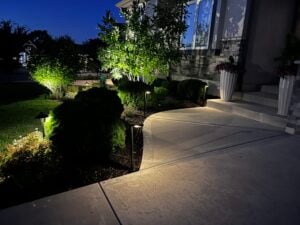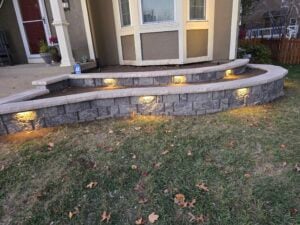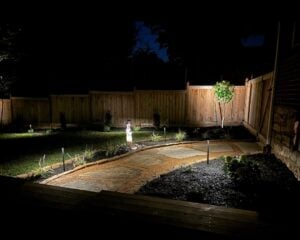
When it comes to creating a truly spectacular outdoor space, landscape lighting is an essential but often overlooked element. Well-designed outdoor lighting not only enhances the beauty of your home and landscaping after dark but also improves safety and security.
At Ascend, we’ve helped hundreds of homeowners transform their outdoor spaces with strategic lighting solutions. In this landscape lighting guide, we’ll walk you through everything you need to know to illuminate your property effectively.
Benefits of Landscape Lighting
The benefits of outdoor lighting extend far beyond mere aesthetics. Here’s why investing in quality landscape lighting is worth considering:
- Enhanced Safety and Security: Properly illuminated walkways, steps, and entryways prevent accidents and injuries by ensuring safe property navigation after dark. Additionally, a well-lit home can deter intruders, as lighting eliminates dark hiding spots and creates the impression that someone is home.
- Extended Outdoor Access: Quality lighting allows you to enjoy outdoor spaces long after sunset. Whether hosting a dinner party or simply relaxing in your backyard, proper illumination extends your time outdoors well into the evening.
- Increased Property Value: A thoughtfully designed landscape lighting system can significantly boost your home’s curb appeal and market value.
- Enhanced Aesthetics: Strategic lighting highlights your home’s architectural features and landscape elements, creating dramatic shadows and focal points that aren’t visible during daylight hours. This adds depth and dimension to your property’s nighttime appearance.
- Energy Efficiency: Modern LED landscape lighting systems consume minimal electricity while providing optimal illumination, making them an environmentally responsible and cost-effective choice for homeowners.
Types of Landscape Lighting
Understanding the various types of landscape lighting available will help you create a comprehensive lighting plan. Here are the most common fixtures and their ideal applications:
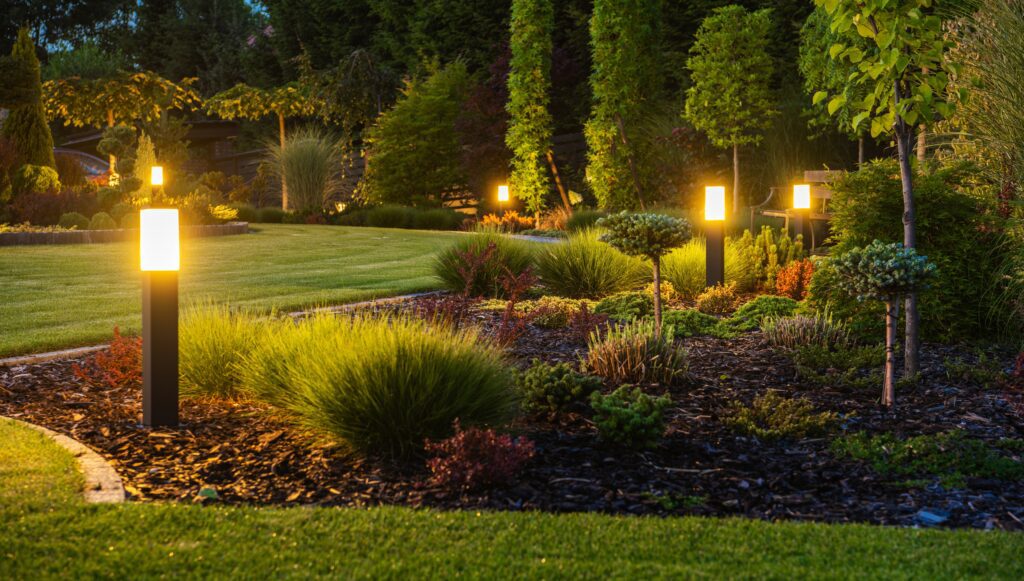
- Path Lights: These fixtures cast light downward to illuminate walkways, garden paths, and the edges of planting beds. They typically stand 14 to 24 inches tall and are spaced six to eight feet apart for optimal coverage.
- Spotlights and Floodlights: These versatile fixtures can highlight trees, architectural features, and garden focal points. Spotlights produce a narrow beam of light, while floodlights cast a wider, more diffuse glow.
- Well Lights: Installed flush with the ground, well lights provide upward illumination without being visible during the day. They’re ideal for lighting tall structures, trees, and walls.
- Step Lights: Designed specifically for illuminating stairs and level changes, step lights improve safety while adding a subtle decorative element to your hardscape.
- String Lights: Perfect for creating a festive atmosphere in entertainment areas, string lights add charm and warmth to patios, pergolas, and outdoor dining spaces.
Landscape Lighting Bulb Types
Choosing the right bulb type is crucial for achieving your desired lighting effects while managing energy consumption and maintenance needs.
LED Bulbs
LED technology has revolutionized landscape lighting. These bulbs use up to 80 percent less energy than traditional incandescent lights and can last 10 to 20 years with normal use. They produce minimal heat, are available in various color temperatures, and have become the industry standard for new installations.
Halogen Bulbs
Halogen bulbs produce a warm, pleasing light. However, these bulbs consume significantly more energy than LEDs and have a much shorter lifespan (approximately two to three years). While these bulbs are less expensive initially, their higher operating costs and frequent replacement needs make them less economical over time.
Solar Lights
Powered by small solar panels that charge during daylight hours, solar fixtures require no wiring and are easy to install. However, they typically provide less consistent and powerful illumination than wired systems and may not perform well during extended periods of cloudy weather.
Smart Lighting Options
The latest landscape lighting systems can integrate with smart home technology, allowing you to control brightness, color, and timing from your smartphone or voice-activated devices. These systems offer unprecedented convenience and customization options.
Landscape Lighting Design Process
Creating effective landscape lighting design for your home requires careful planning and consideration of both practical and aesthetic factors.
First, you’ll need to assess your needs and goals. Begin by identifying your primary lighting objectives; are you concerned with security? Do you want to highlight specific landscape features? Understanding your goals will guide your fixture selection and placement decisions.
Just as interior designers layer different light sources to create depth and dimension, landscape lighting is most effective when it incorporates multiple types of fixtures at varying heights and intensities. Combine ambient, task, and accent lighting for the most sophisticated result.
Finally, you’ll need to consider seasonal changes. Remember that your landscape evolves throughout the year. For example, trees will provide shadowing effects in summer but not offer the same in winter. Because of this, you’ll need to plan for year-round appeal and seasonal variations.
Consider these other landscape lighting tips, as well.
Map Out Exterior Lighting:
- Entrances and Driveway: Your home’s entrance creates a first impression for visitors and establishes your property’s security perimeter. Consider using post lights along the driveway, supplemented by wall-mounted fixtures near the garage and front door.
- Pathways and Walkways: Path lights should guide movement while providing sufficient illumination for safety. For most residential pathways, fixtures should be placed in a straight line and every six to eight feet apart. This will provide adequate coverage without overwhelming the landscape.
- Functional Areas: Outdoor kitchens, dining areas, and seating spaces require task lighting that allows for comfortable activity after dark. Consider overhead options like string lights or recessed fixtures mounted in pergolas or under eaves.
- Perimeter Security: Strategically placing lights around your property’s boundaries deters intruders and eliminates potential hiding spots. Motion-activated floodlights are particularly effective near access points and vulnerable areas.
Highlight Architectural Features:
- Façade Lighting: Consider placing fixtures close to the base of a wall to create an even glow and positioning lights at sharp angles to emphasize texture. Cross-lighting techniques also eliminate harsh shadows.
- Columns and Pillars: Uplighting columns or pillars creates dramatic vertical elements that draw the eye upward and emphasize your home’s height and grandeur. For the most natural effect, position fixtures a short distance away from the base of the structure.
- Eaves and Overhangs: Downlighting from eaves creates a soft, natural illumination similar to moonlight. This technique is particularly effective for lighting large areas like patios without visible ground-level fixtures.
- Stone and Brick Features: Textured surfaces like stone walls, brick facades, and stucco finishes come alive under properly positioned lighting. Grazing these surfaces with light from sharp angles emphasizes their three-dimensional qualities and brings out their natural colors and textures.
Illuminate Plants and Trees:
- Tree Uplighting: Placing spotlights at the base of trees creates spectacular shadowing effects on branches and foliage.
- Downlighting from Trees: Mounting fixtures high in mature trees creates a moonlight effect that casts gentle, dappled shadows across your landscape.
- Shrubs and Garden Beds: Low-voltage fixtures placed among plant beds create depth and highlight textures that go unnoticed during daylight hours. Consider using adjustable fixtures that can be repositioned as plants grow and mature.
- Seasonal Displays: Incorporate flexibility into your system to accommodate special lighting for seasonal plantings or holiday displays. Outlets strategically placed throughout your landscape allow temporary lighting additions during special occasions.
How to Find the Right Landscape Lighting for Your Home
Selecting the ideal landscape lighting for a home requires careful consideration of several factors.
Quality Matters
Investment-grade fixtures constructed from durable materials like brass, copper, and stainless steel withstand environmental challenges and develop a beautiful patina over time. While their initial cost is higher than plastic alternatives, their longevity and performance make them more economical in the long term.
Consider Professional Design
A professional landscape lighting designer brings expertise in fixture selection, placement techniques, and electrical requirements. Their knowledge ensures optimal illumination while avoiding common pitfalls like over-lighting, glare, and energy waste.
Start with a Lighting Plan
Before purchasing any fixtures, develop a comprehensive lighting plan that addresses all areas of your property. This allows for appropriate transformer sizing and voltage drop calculations to ensure consistent performance across your system.
Work with an Experienced Landscaping Company
Partnering with an established landscaping company that specializes in outdoor lighting provides numerous advantages:
- Access to professional-grade fixtures and materials not available to retail consumers
- Expert knowledge of lighting techniques and placement strategies
- Proper electrical understanding to ensure system safety and longevity
- Comprehensive service from initial design through installation and ongoing maintenance
- Warranty protection on both products and workmanship
- Ability to integrate lighting with existing landscape features and future plans
A reputable landscaping company will work closely with you to understand your aesthetic preferences, practical needs, and budget constraints, creating a customized lighting solution that enhances your property’s unique characteristics. They’ll also have an extensive portfolio of completed projects demonstrating their capabilities and design style.
A thoughtfully designed landscape lighting system transforms your property after dark, extending your enjoyment of outdoor spaces while enhancing safety, security, and curb appeal. By understanding the various fixture types, bulb options, and design techniques outlined in this outdoor lighting guide, you’ll be well-equipped to make informed decisions about illuminating your landscape.
At Ascend lawn & landscape, we specialize in creating custom landscape lighting solutions that highlight your property’s unique features while addressing your specific needs and preferences. Contact us today to schedule a consultation and discover how professional landscape lighting can enhance your home’s beauty and functionality after dark.